
Description
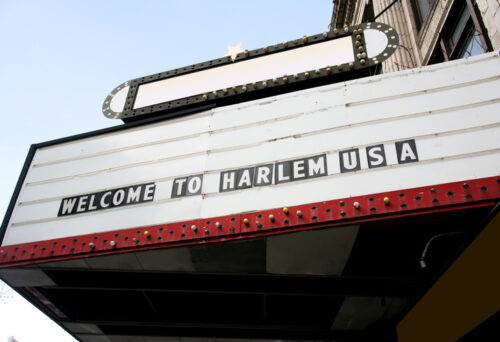
Lasting roughly from the 1910s through the mid-1930s, the Harlem Renaissance (a period of rich cross-disciplinary artistic and cultural activity) is considered the golden age in African-American culture. Artists associated with the movement asserted pride in Black life and identity, a rising consciousness of inequality and discrimination, and an interest in the rapidly changing modern world. Many artists themselves experienced a freedom of expression through the arts for the first time.
Acknowledged as highly accomplished and influential visual artists of the Harlem Renaissance are Charles Henry Alston and Aaron Douglas. Charles Alston was an American painter, sculptor, illustrator, muralist and teacher, and was the first African-American supervisor for the Works Progress Administration’s Federal Art Project. Among his many accomplishments, Alston designed and painted murals in Harlem Hospital and the Golden State Mutual Life Insurance Building. In 1990, Alston’s bust of Martin Luther King, Jr. became the first image of an African-American to be displayed at the White House.
Aaron Douglas was an American painter, illustrator, visual arts educator –and one of the first artists to document the history of the African-American experience through visual art. His innovative, cubist and/or art-deco style was influenced by African art that used the rhythm of circles, diagonals, and wavy lines to energize his artwork. Primarily due to the Stock Market Crash of 1929, the Harlem Renaissance came to a close, but, the impact on America was indelible–bringing notice to the great works of African-American art and its artists, including Charles Alston and Aaron Douglas. Please join us as we explore these two masterful artists who inspired and influenced future generations of African-American artists.